




Calender Machine
Dalian YISEN international trade CO., LTD established in 2013, located in china Dalian XiGang District, is a professional machinery enterprise. The company's main products include upstream equipment, mixing machine, open mill mixing, film application, internal mixer, calender machine, etc.
-
![Calender Line]() Calender LineRead More
According to the width that chose the working width;. According to the thickness that know the
-
![450*1120 Three Roll Calender Line]() 450*1120 Three Roll Calender LineRead More
width :500-1000mm. thickness:0.3-2mm. drive motor :37kw*3set.
-
![610*1730 Calender]() 610*1730 CalenderRead More
Main machine 4-roll calender. Diameter :610mm. working width:1730mm. sheeting Width:1500mm.
-
![XY-4F 610*1730Calender]() XY-4F 610*1730CalenderRead More
Size :610*1730 4-roll calender. Diameter :610mm. working width:1730mm. sheeting Width:1500mm.
-
![3f450*1200 Calender]() 3f450*1200 CalenderRead More
extruder conveyor for calender. XY-3F450*1200 calender. extruder size XJD-120pin barrel cold
-
![450calender Machine]() 450calender MachineRead More
calender machine line are application for sheeting. Size:450*1200. three shaft driving . 3-motor
-
![3-roll Calender Machine]() 3-roll Calender MachineRead More
3-roll calender line machine. 3-motor :37KW*3set. 3-shaft gear reducer . Min thinckness:0.3mm.
-
![3-roll Calender Machine]() 3-roll Calender MachineRead More
3-roll calender machine. 3-motor :37KW*3set. 3-shaft gear reducer . min thinckness:0.3mm.
-
![3F Roll Calender Machine]() 3F Roll Calender MachineRead More
3-roll calender . Motor :1set. Speed ratio unadjustable.
-
![Four Roll Calender Machine]() Four Roll Calender MachineRead More
Width:1500mm. Thickness:0.2-5mm. Motor:4set.
-
![Twin Screw Extrusion Calendering]() Twin Screw Extrusion CalenderingRead More
Twin Screw Extrusion Calendering
-
![Three Roll Calender Machine]() Three Roll Calender MachineRead More
Three Roll Calender Machine


On site Technical Support
Our skilled operators stand ready to provide real-time support, ensuring efficient resolution of any challenges you may encounter in your operations. The strength of our global presence is further amplified by a team of highly-trained technicians reaching you within 48 hours, facilitating the quickest possible resumption of production.
From purchase to installation always at your side
Our commitment to our customer’s success goes beyond the manufacturing process; it extends to the crucial phases of testing and training. Here's a closer look at the integral services we offer to ensure optimal performance and user proficiency.
Rigorous Assurance
Our Factory Acceptance Tests (FAT) serve as a robust validation process conducted within our facilities. With meticulous scrutiny, we ensure that every extrusion line meets and exceeds industry standards before it reaches your production floor.
Benefits of Calender Machine


Improved surface finish
The calendering process is renowned for its ability to impart a smooth, glossy, and uniform surface finish to materials. This characteristic is particularly desirable in industries where aesthetic appeal and visual appeal are paramount, such as packaging, decorative laminates, and textiles.
Controlled thickness
By precisely regulating the pressure and roller configurations, the calendering process enables manufacturers to achieve consistent and uniform material thicknesses. This level of control is essential in applications where dimensional accuracy is critical, such as in the production of gaskets, seals, and precision components.
Enhanced physical properties
The intense compression and shear forces experienced during the calendering process can significantly improve the physical properties of materials. This includes increased density, improved mechanical strength, and enhanced dimensional stability, all of which contribute to the overall performance and durability of the final product.
Increased productivity
Calendering machines are designed for continuous operation, allowing for high-volume production and improved efficiency. This streamlined process reduces downtime and maximizes output, making it an attractive choice for manufacturers seeking to optimize their operations.
Versatility
The calendering process can accommodate a wide range of materials, from plastics and rubbers to paper and textiles. This versatility enables manufacturers to leverage a single technique for diverse applications, reducing the need for specialized equipment and streamlining production processes.
Customization potential
By adjusting various parameters, such as roller configurations, temperatures, and pressures, the calendering process offers manufacturers the ability to tailor the final product’s characteristics to meet specific application requirements. This level of customization ensures that the end product meets the desired specifications and performance criteria.
Product Parameters
|
Mode/ |
XY-4(Γ) |
XY-4(Γ) |
XY-4(Γ) |
XY-4(Γ) |
XY-4(Γ) |
XY-4(Γ) |
XY-4(Γ) |
XY-4(Γ) |
XY-4(Γ) |
XY-4(Γ) |
XY-4(Γ) |
XY-4(Γ) |
XY-4(Γ) |
||
|
Roll Dia |
mm |
230 |
252 |
300 |
360 |
400 |
450 |
550 |
550 |
610 |
710 |
710 |
800 |
860 |
|
|
Roll Working Length |
mm |
630 |
720 |
900 |
1120 |
1200 |
1400 |
1500 |
1500 |
1730 |
1800 |
2130 |
2500 |
2500 |
|
|
Roll Ratio |
1:1:1 |
1:1 |
1:1:1:1 |
0.733:1:1:0.73 |
1:1.38:1.383:1 |
1:1.5:1.5:1 |
1:1.5:1.5:1 |
1:1.5:1.5:1 |
1:1.4:1.4:1 |
0.5~1 |
1:1.5:1.5:1 |
0.5~1 |
0.5~1 |
||
|
Middle-Roll Linear Speed |
r/min |
2.1~21 |
1.59~1.59 |
1.8~18 |
2~20.1 |
3~26.3 |
2.5~25 |
3~30 |
3~30 |
4~40 |
4~40 |
3~30 |
4~30 |
4~30 |
|
|
Adjusting Nip Range |
mm |
0~6 |
0~6 |
0~6 |
0~10 |
0~10 |
0~10 |
0~10 |
0~10 |
0~20 |
0~30 |
0~20 |
0~30 |
0~30 |
|
|
Mincalendering Product Thckness |
mm |
0.2 |
0.2 |
0.2 |
0.2 |
0.2 |
0.2 |
0.2 |
0.2 |
0.2 |
0.2 |
0.2 |
0.2 |
0.2 |
|
|
Calendering Product Width |
mm |
500 |
580 |
700 |
920 |
1000 |
1200 |
1300 |
1300 |
1500 |
1600 |
1900 |
2200 |
2200 |
|
|
Motor Power |
km |
15 |
22 |
45 |
55 |
75 |
110 |
132 |
160 |
200 |
90kw*2 |
220 |
132kw*3 |
160kw*4 |
|
|
DIMENSIONS |
L |
mm |
3800 |
2950 |
4400 |
3300 |
6400 |
6500 |
6900 |
7550 |
6580 |
9950 |
7010 |
10400 |
12000 |
|
W |
mm |
930 |
990 |
1650 |
940 |
1620 |
1970 |
1820 |
2400 |
2460 |
3600 |
4150 |
3900 |
3800 |
|
|
H |
mm |
1890 |
1645 |
2200 |
2350 |
2490 |
2740 |
2650 |
3400 |
2920 |
4870 |
3730 |
5140 |
5850 |
|
|
Ross Weight |
t |
~4.8 |
~5 |
~12 |
~16 |
~20 |
~23 |
~36 |
~45 |
~50 |
~110 |
~100 |
~130 |
~180 |
|
Types of Calender Machine
Two roll calender
A two-roll rubber calender has two parallel rollers. They can be heated or cooled as needed for processing. Each roller has its drive system and adjusting mechanism. They control the spacing and the speed of the rollers. The frame, drive mechanism, heating/cooling system, and control panel are its main components.
Three roll calender
The three-roll calender provides higher calendering pressures and finer thickness control than the two-roll calender. The multiple calendering process reduces material springback and improves product uniformity and quality. Three roll calenders are common for making medium-thickness rubber sheets and compounds. They are widely used to make medium to high-end rubber products, such as tire cord fabrics and high-performance adhesive tapes.
Four roll calender
The four-roll rubber calender consists of four rollers arranged in parallel, usually in a Z-shape or inverted L-shape. This design allows the material to be calendered many times. It goes between three pairs of rollers, which provide very high pressure and precision. This is for making ultra-thin, high-quality rubber sheets.
Packaging
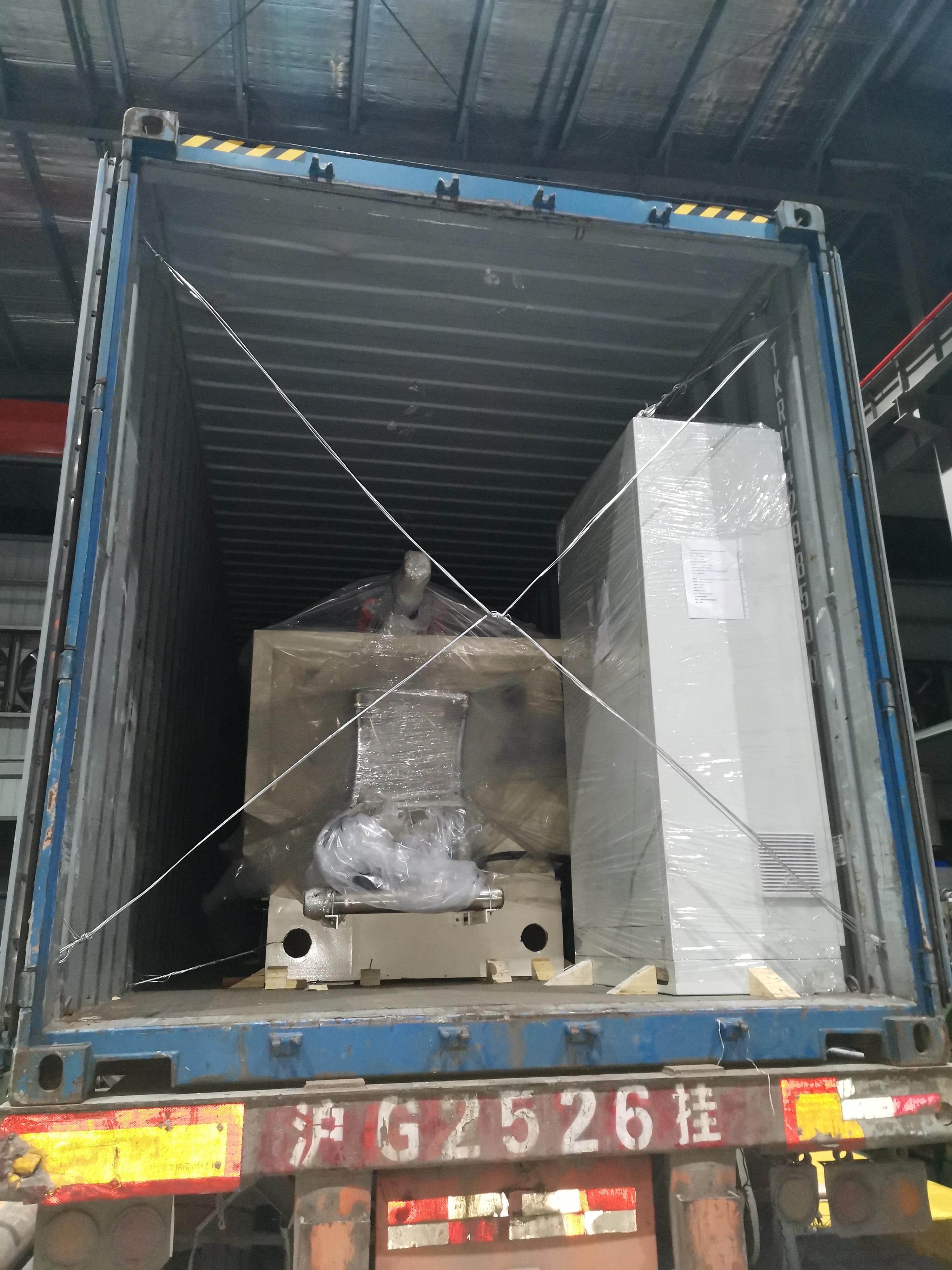
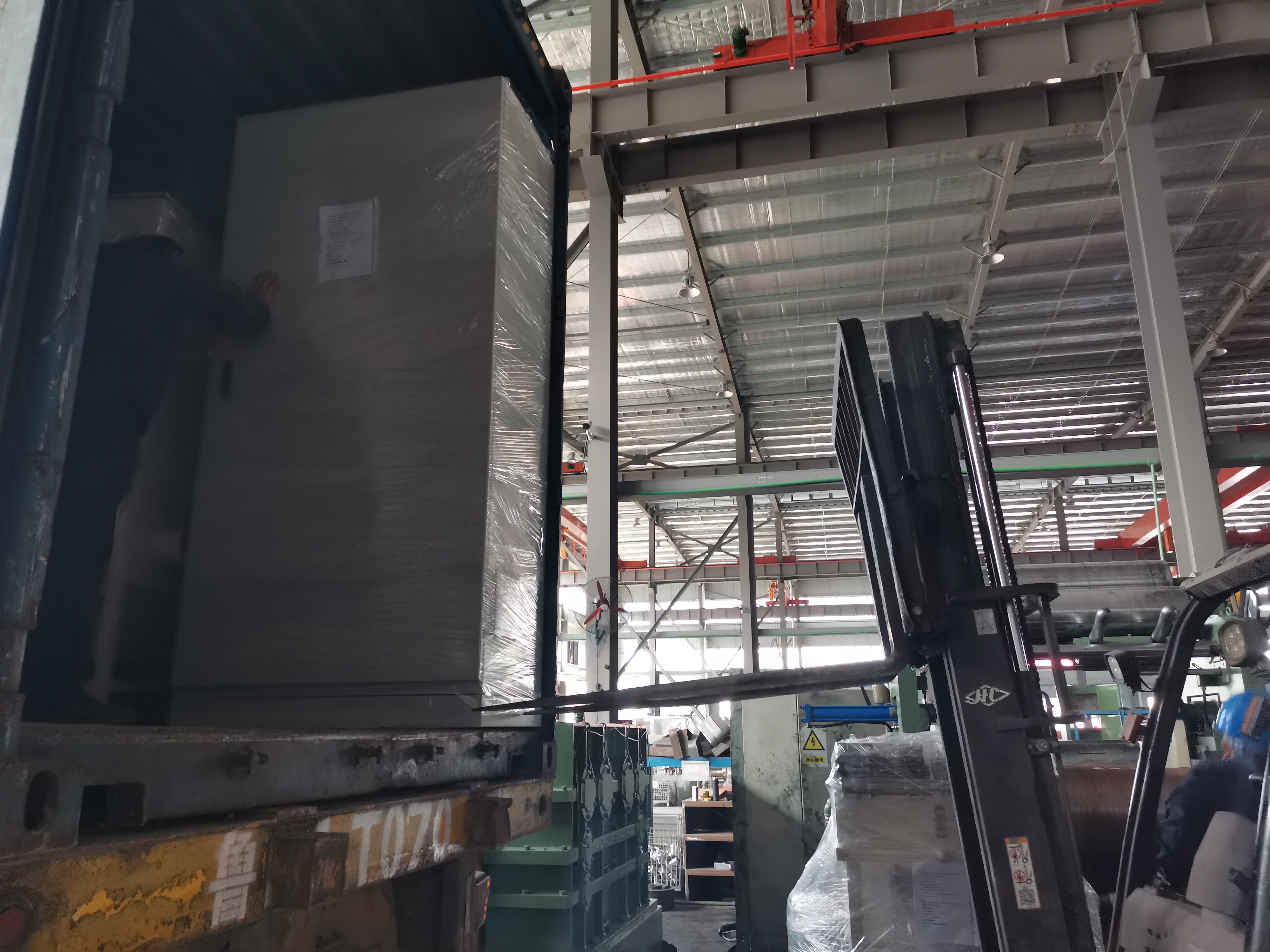
Shipping

FAQ
We're professional calender machine manufacturers and suppliers in China, specialized in providing high quality products with low price. We warmly welcome you to buy or wholesale customized calender machine made in China here from our factory. Contact us for quotation.
4 roll rubber calender machine, three roll calender machine, calender machine textile